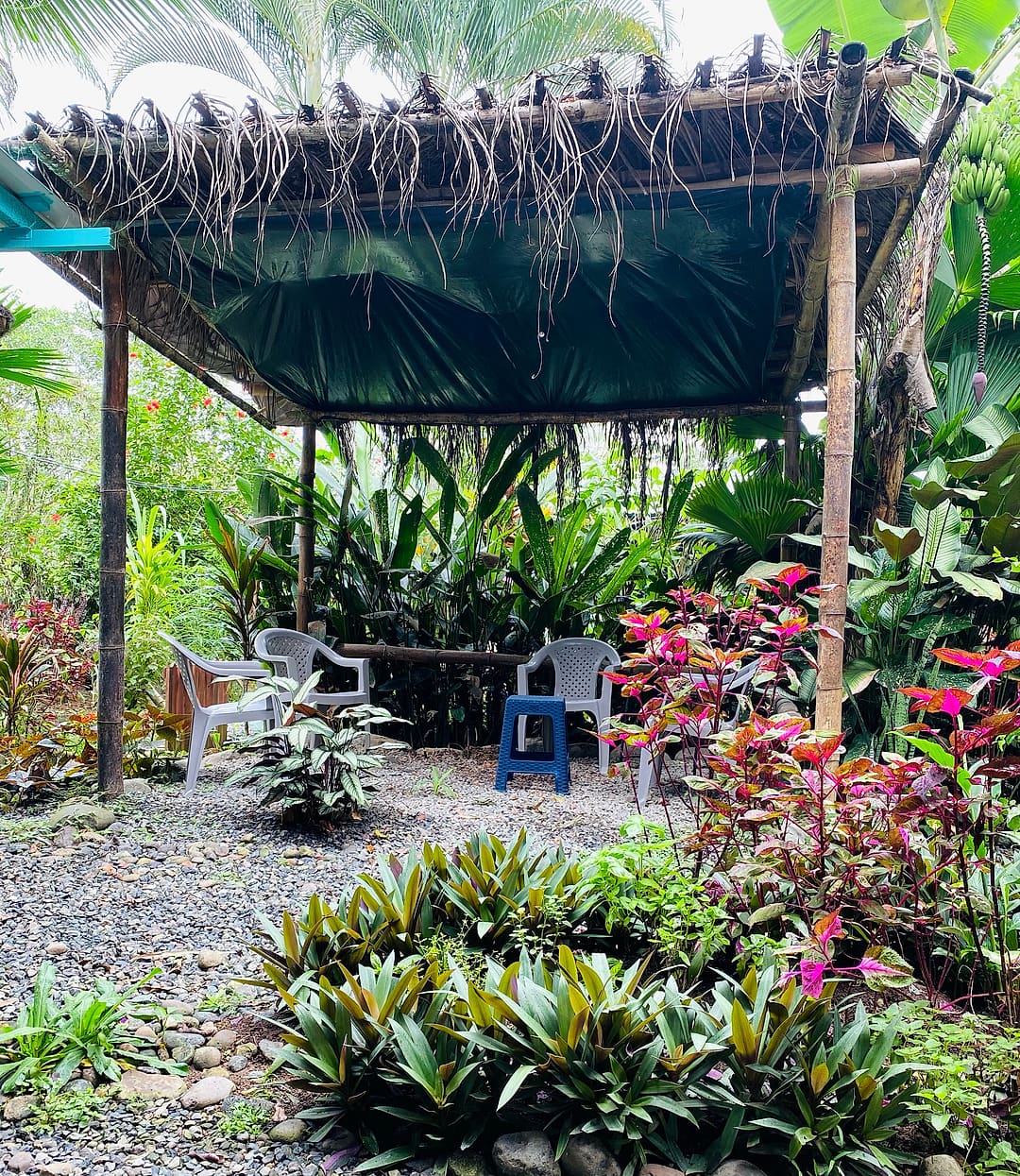
Mini permaculture farm · 600 m²
Beautiful and edible
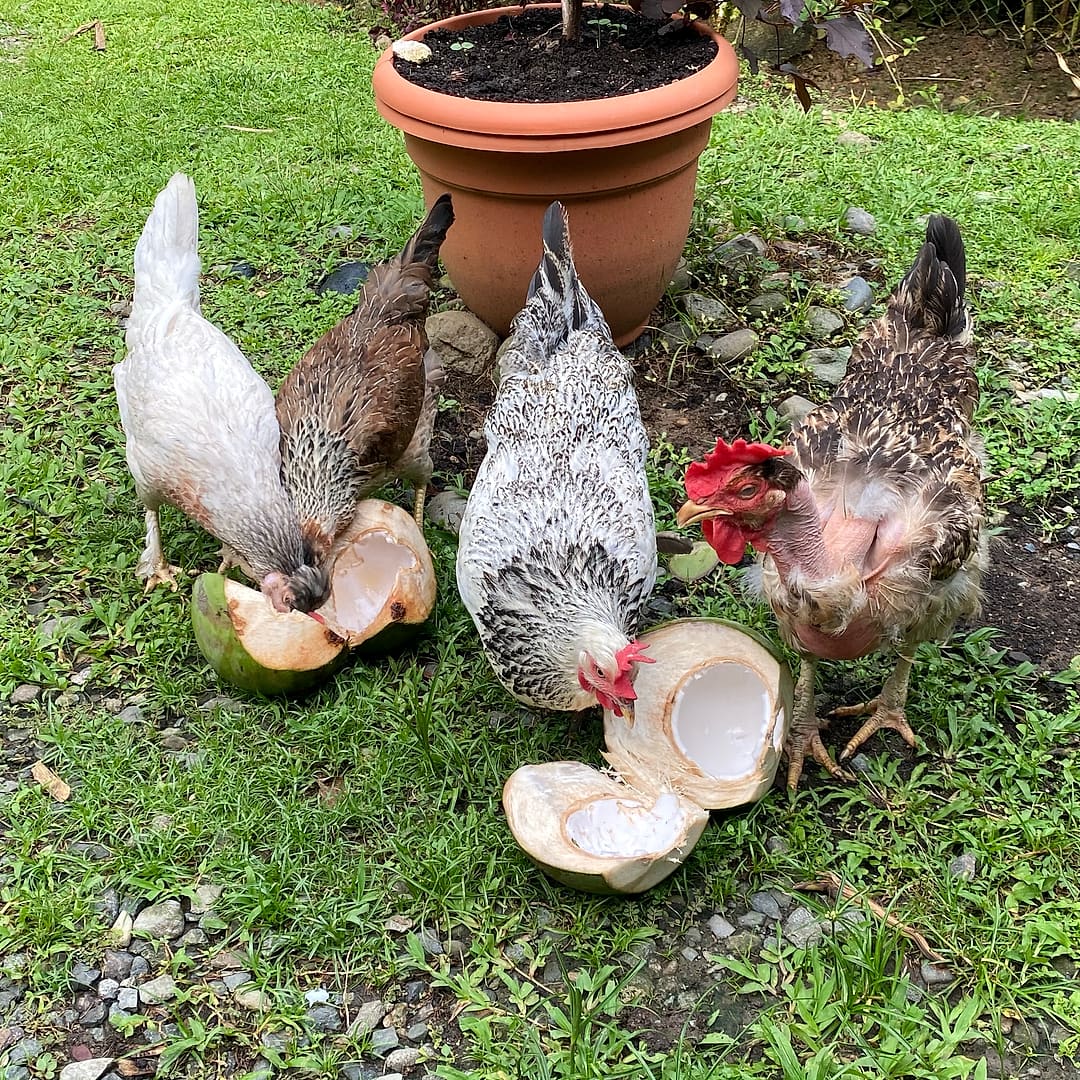
The house works every day to keep the property both beautiful and edible. The garden is always evolving: tropical fruit, vegetables, herbs, medicinal plants, orchids — and happy chickens.
From the garden notebook
What’s growing here?
Everything the house names in its garden, on herbarium cards. Mark the ones you’re curious about and bring them to class.
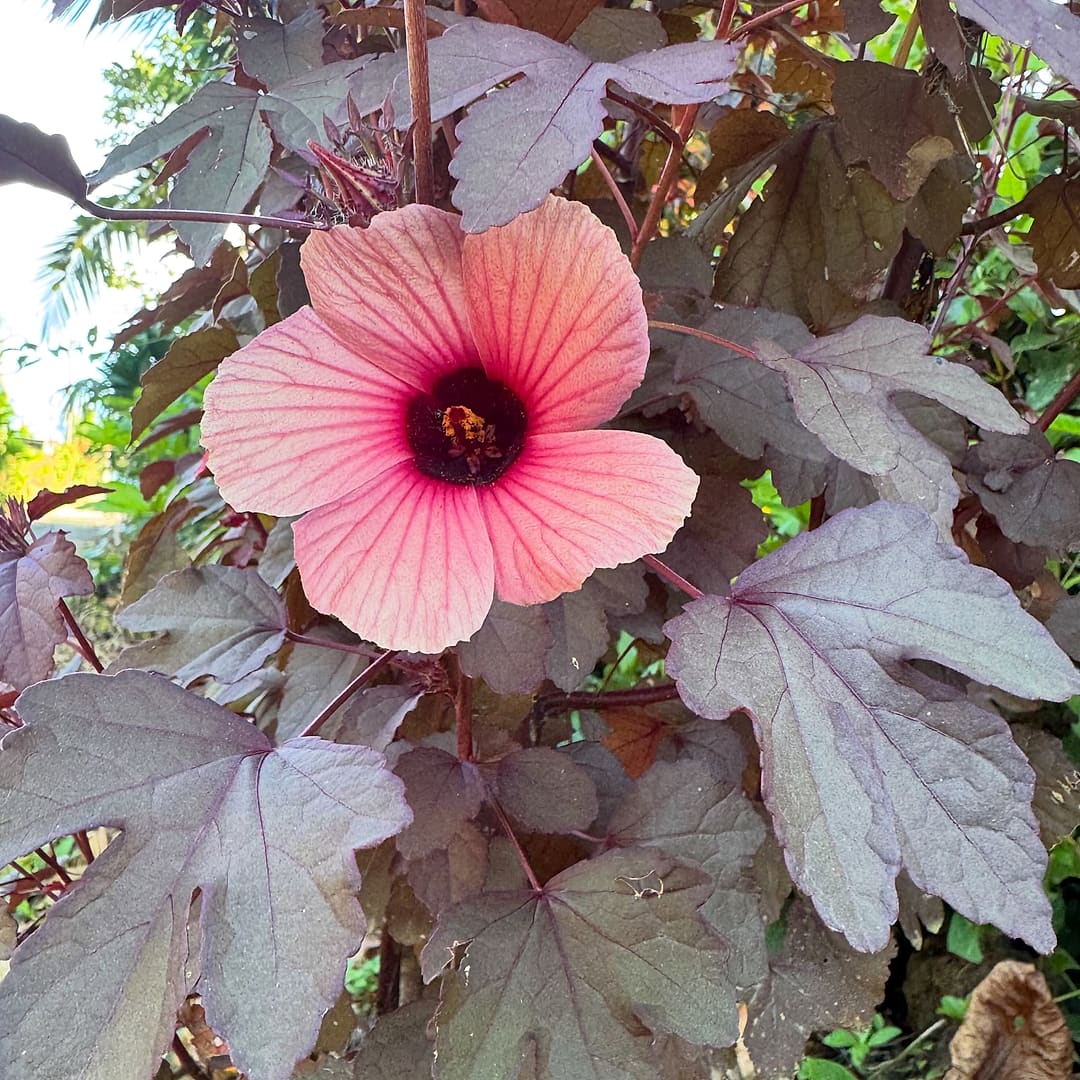
Cranberry hibiscus
Hibisco arándano · Hibiscus acetosella
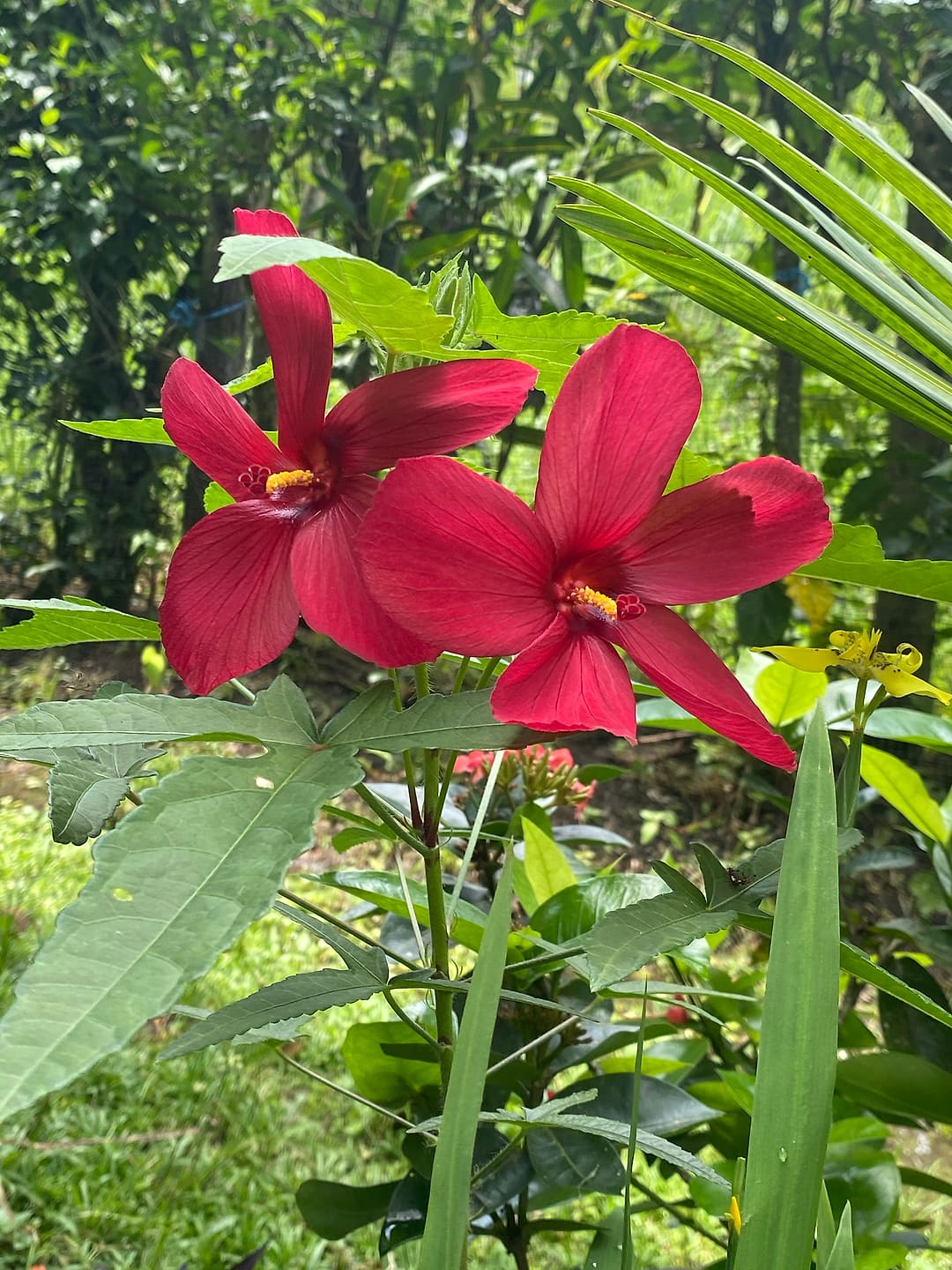
From the house’s Instagram: “the leaves, flowers, and shoots are edible both raw and cooked.” Tart and citrusy — lovely in salads, soups and sandwiches.
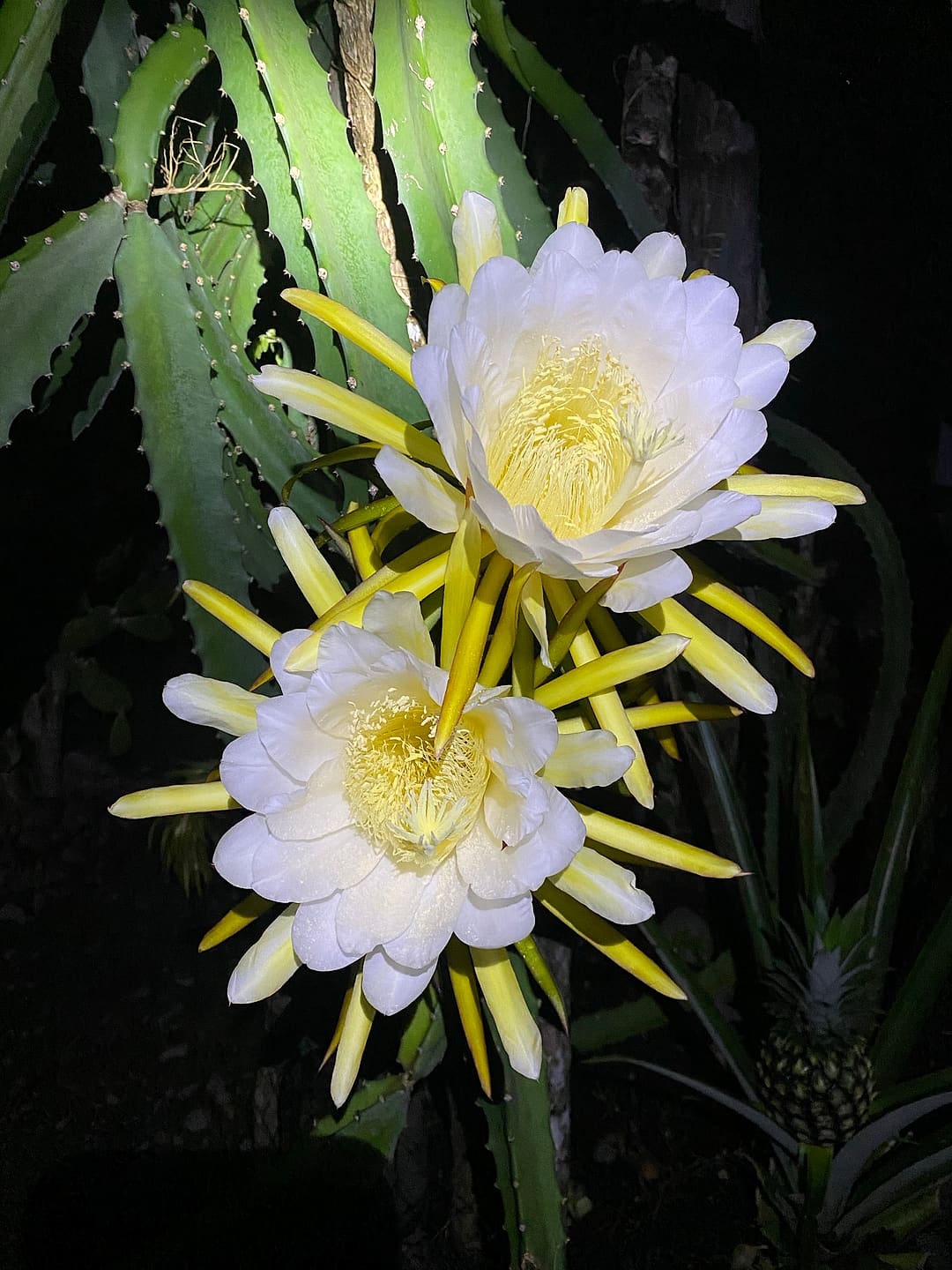
Dragonfruit
Pitahaya · Selenicereus undatus
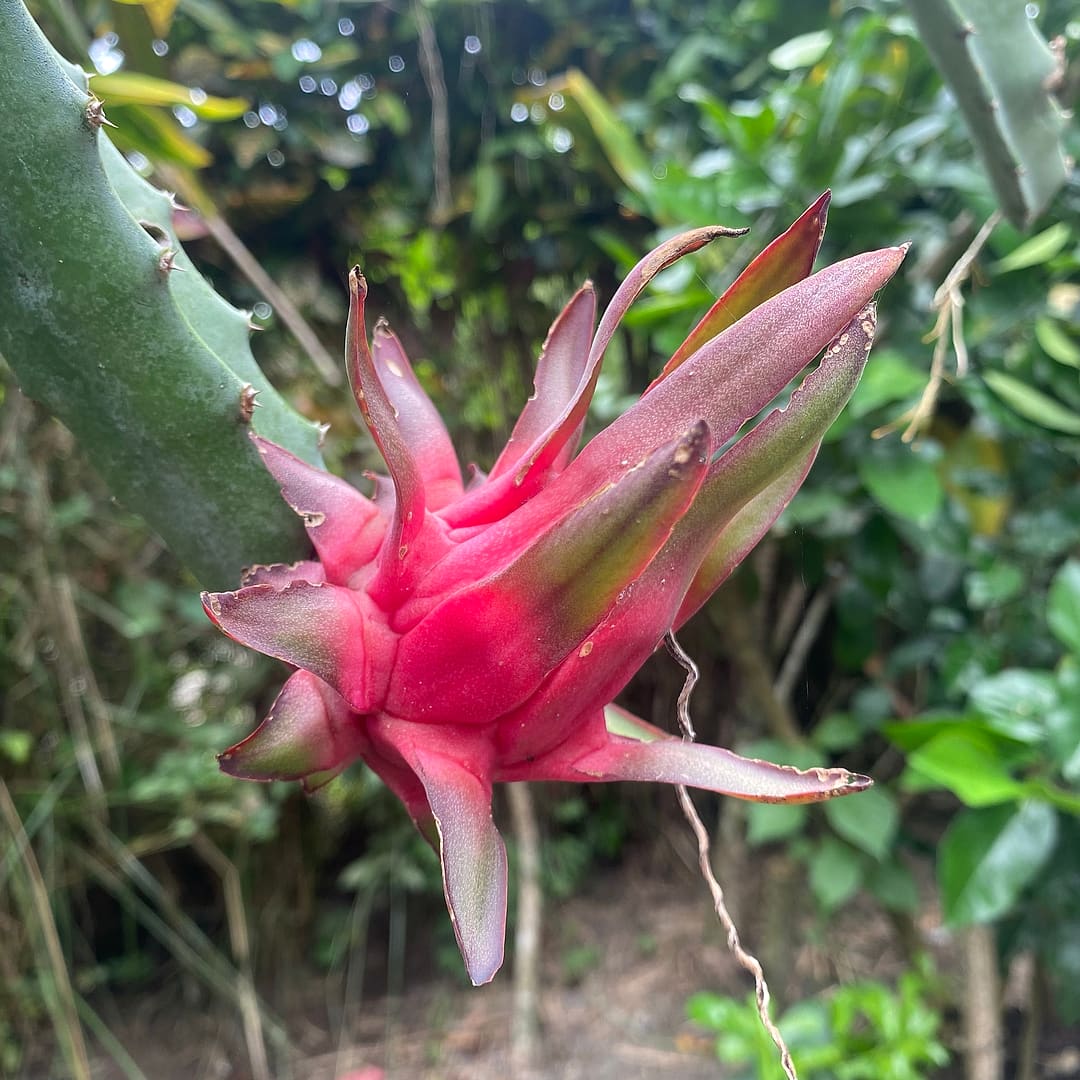
A climbing cactus. Its huge white flowers open at night and are gone by the next day — the owners caught these two mid-bloom.
Soursop
Guanábana · Annona muricata
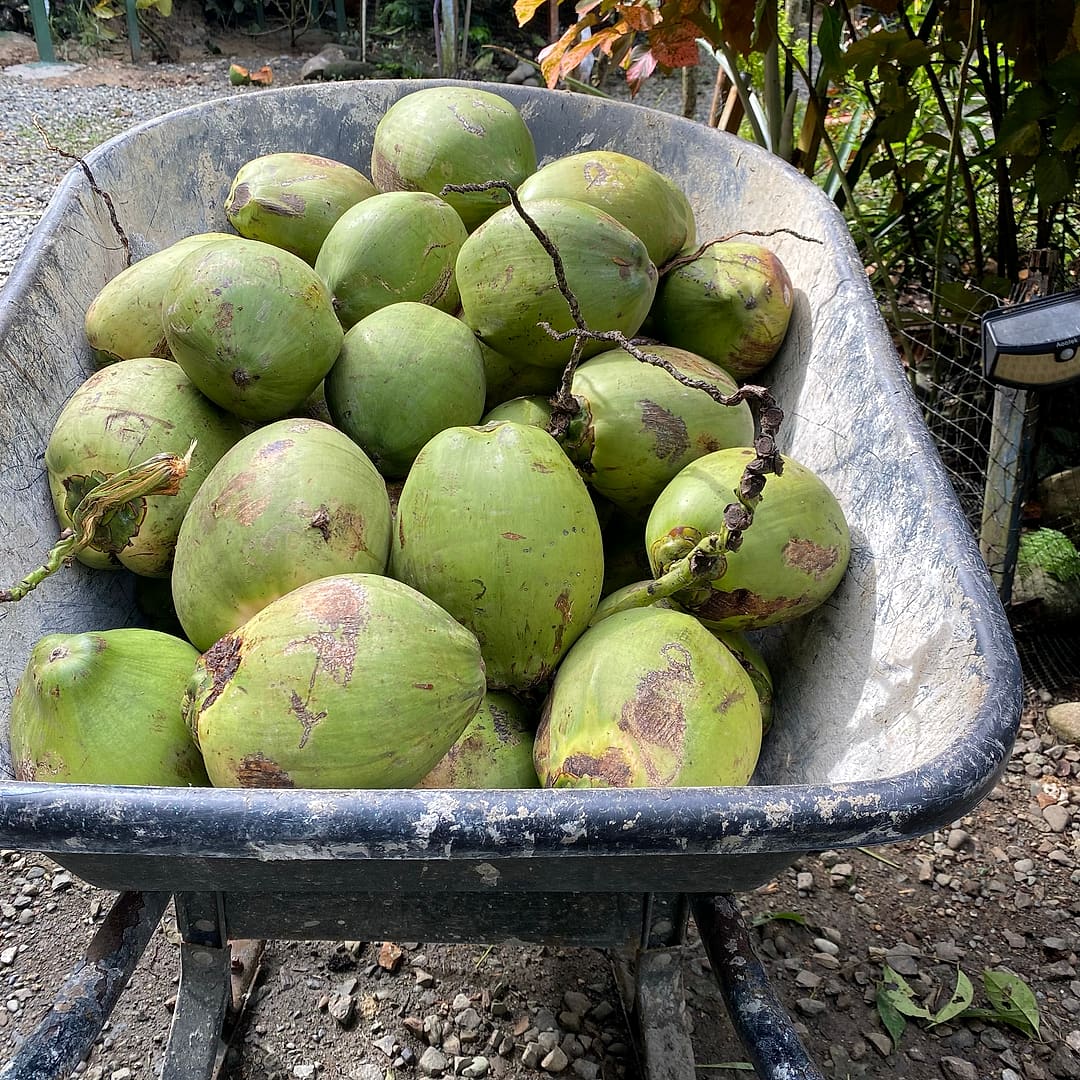
A spiky green fruit with soft white pulp, sweet and tangy. In Costa Rica it’s a favourite for batidos (fruit shakes).
Starfruit
Carambola · Averrhoa carambola
Slice it crosswise and every piece is a five-pointed star. Juicy, sweet-sour, wonderful in fresh drinks.
People with kidney problems are generally advised not to eat starfruit.
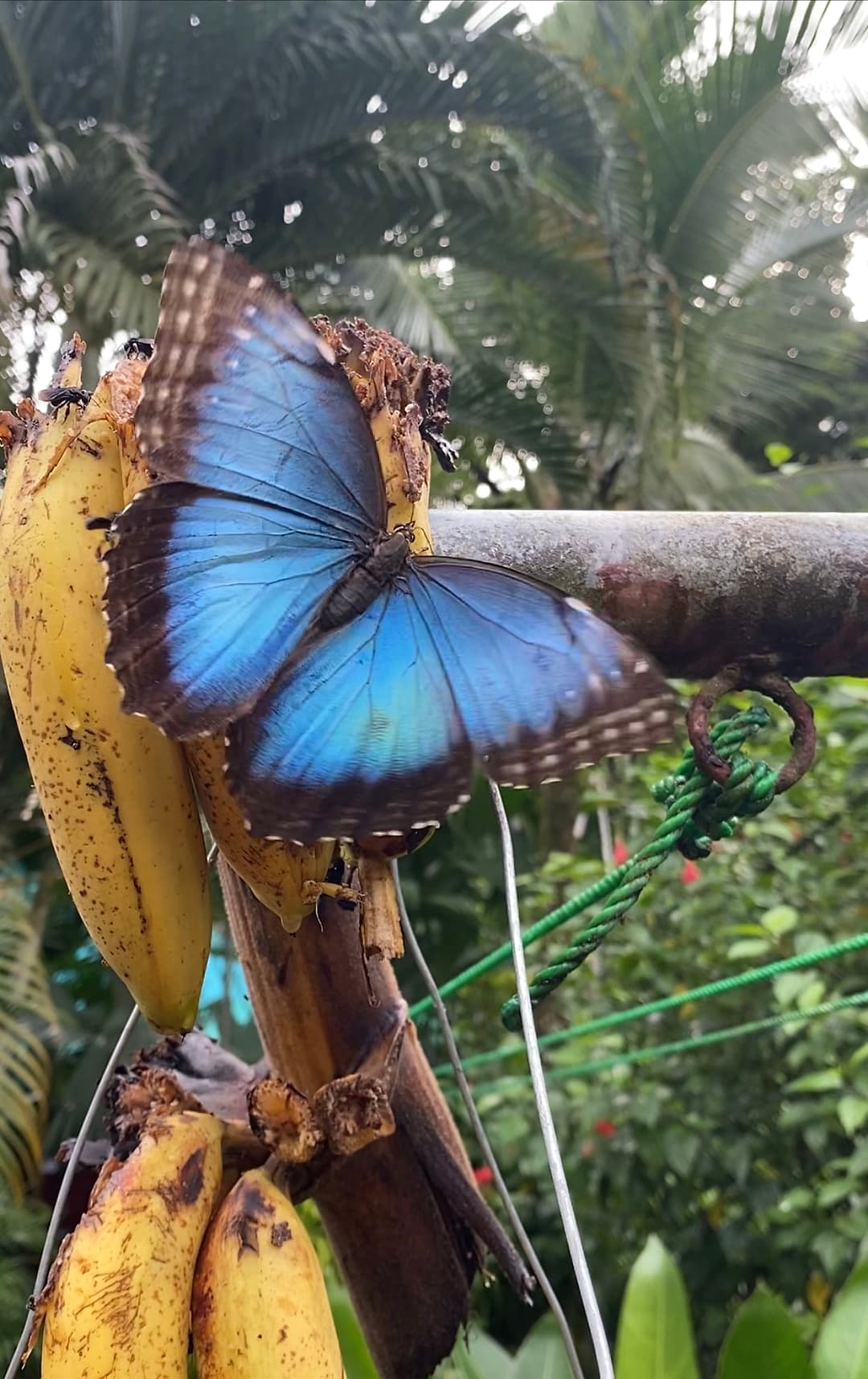
Bananas
Bananos · Musa
Technically giant herbs, not trees. Bananas shaped the history of the Caribbean coast of Costa Rica — and the ripe ones in the garden attract blue morphos.
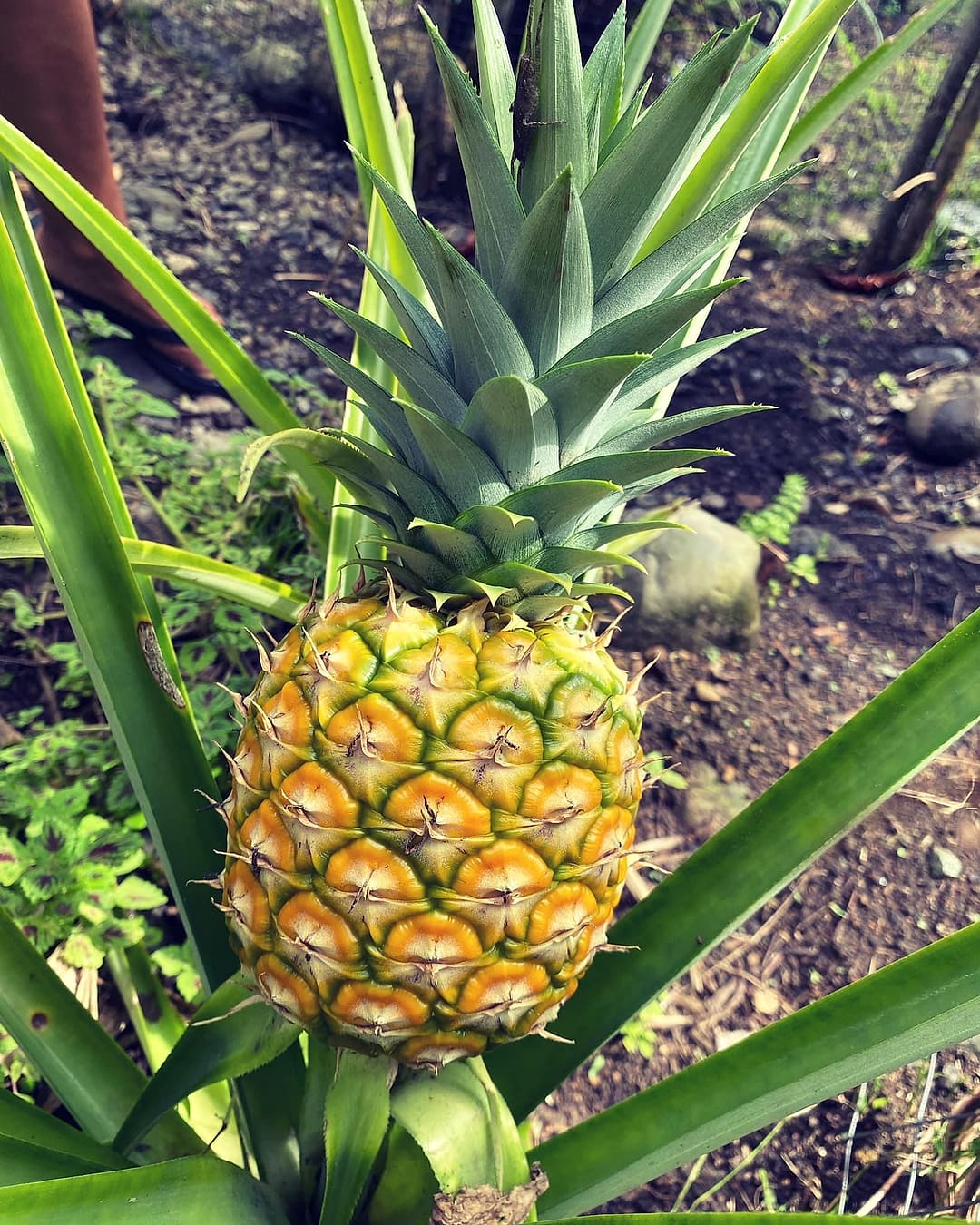
Pineapple
Piña · Ananas comosus
One fruit per plant, and it takes well over a year to ripen. Plant the leafy crown and you can grow a new one.
Limes
Limones · Citrus
In Costa Rica a “limón” is usually what English speakers call a lime — squeezed over everything from ceviche to fresh fruit.
Cucumbers
Pepinos · Cucumis sativus
Climbing up a trellis in the garden — proof that a small space can grow a lot.
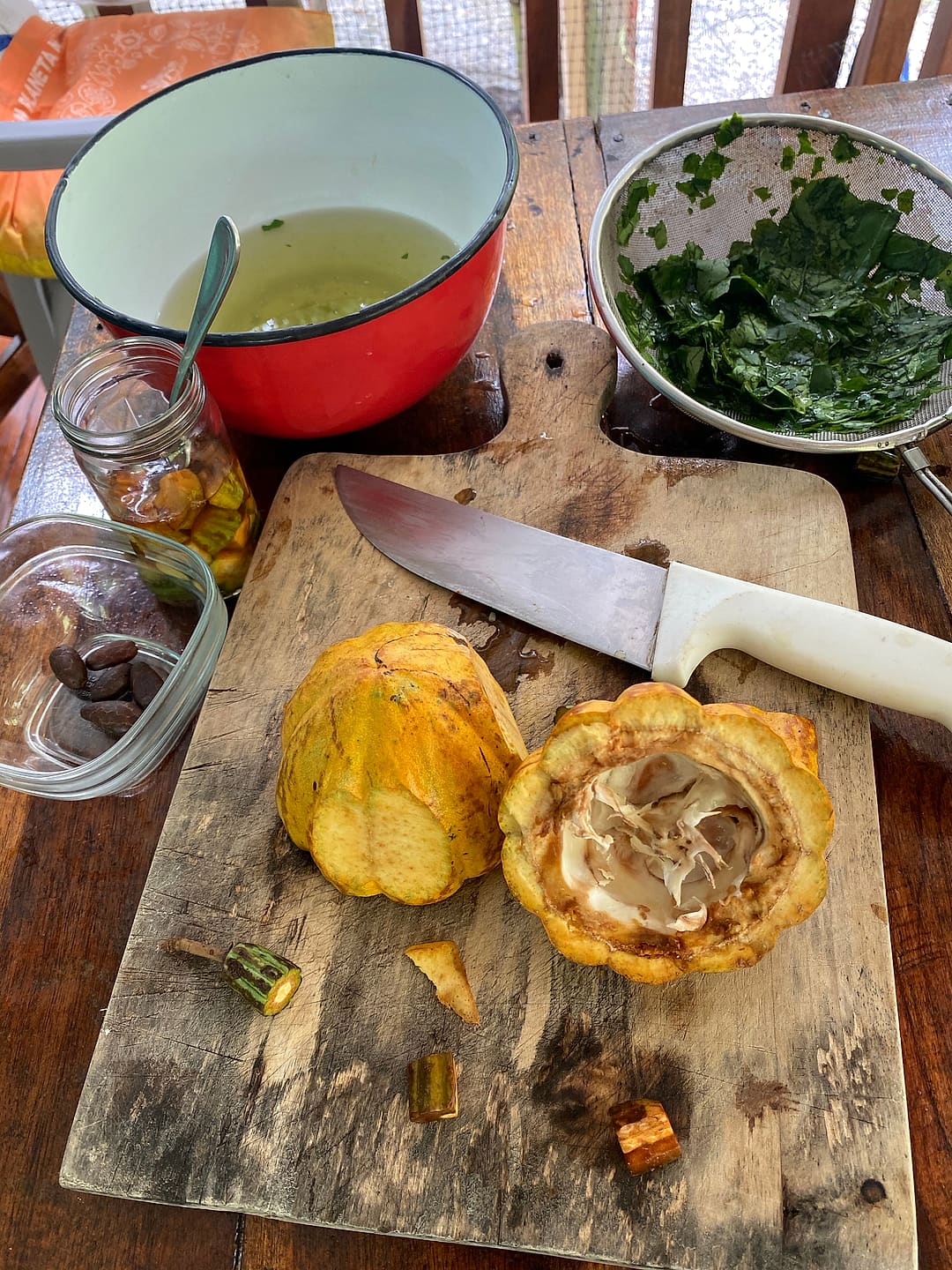
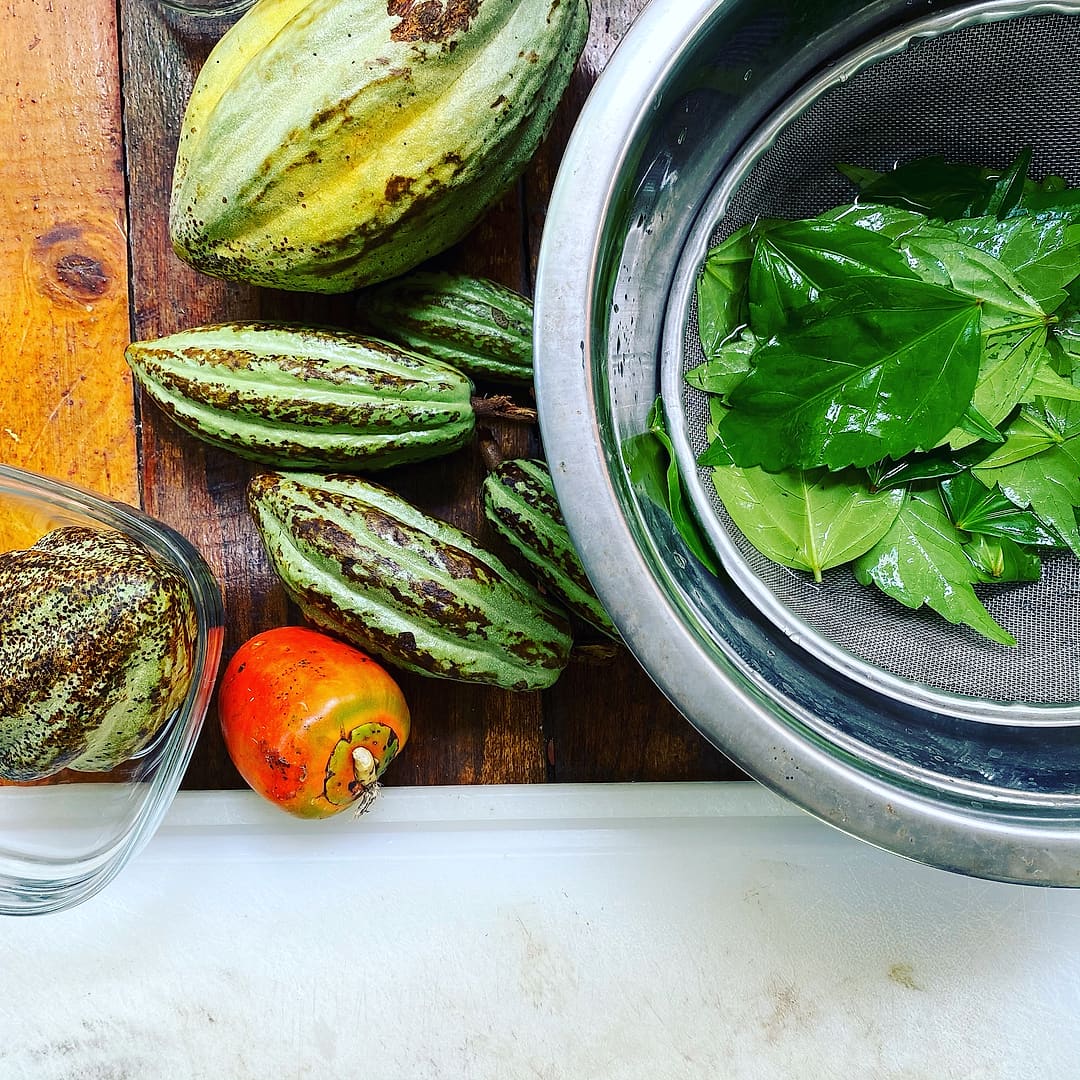
Cacao
Cacao · Theobroma cacao
Pods grow straight from the trunk. Inside, seeds wrapped in sweet white pulp you can eat fresh; fermented and dried, the seeds become chocolate. Cacao has deep roots in Talamanca and in Bribri culture.
Coffee
Café · Coffea
Coffee cherries turn red when ripe, and each usually holds two seeds — the beans. The house’s coffee and tea are on for guests all day.
Sugarcane
Caña de azúcar · Saccharum officinarum
A giant grass you can chew straight from the stalk. Costa Rica’s tapa de dulce — unrefined cane sugar — is made from its juice.
Ginger
Jengibre · Zingiber officinale
A knobbly rhizome for teas and cooking — and the soul of agua de sapo, Limón’s Caribbean drink of ginger, lime and tapa de dulce.
Turmeric
Cúrcuma · Curcuma longa
Ginger’s orange cousin. Cut the rhizome and your fingers turn gold — it colours curries, rice and teas.
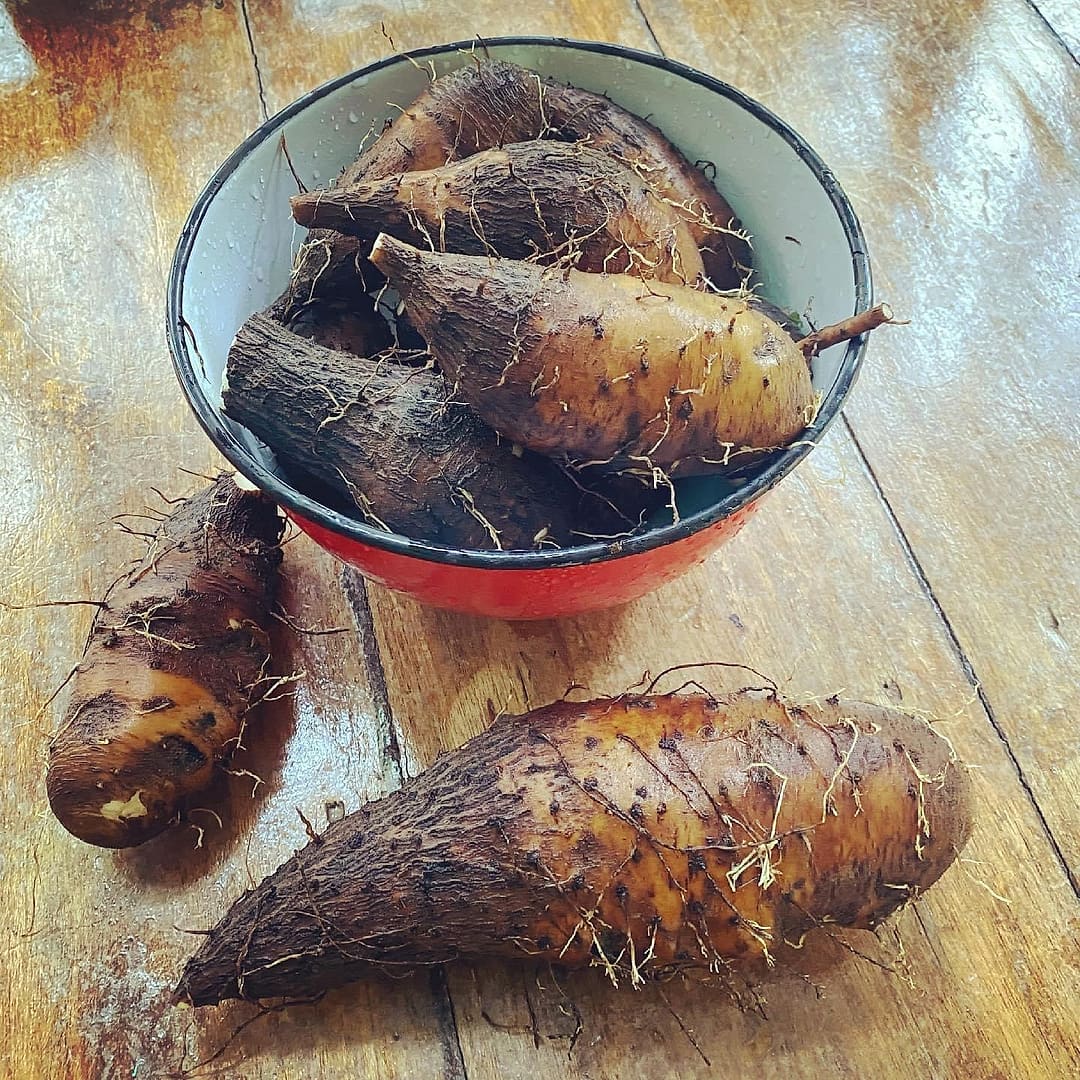
Cassava
Yuca · Manihot esculenta
A starchy root that goes into Caribbean stews like rondón, or simply boiled or fried.
Always peeled and cooked — never eaten raw.
Yampí
Yampí · Dioscorea trifida
A small tropical yam, cooked like potatoes in soups and stews. Ask about it in class — it’s one of the garden’s quiet stars.
Sweet potato
Camote · Ipomoea batatas
Sweet tubers below ground, and tender leaves above that can be cooked like spinach.
Lemongrass
Zacate de limón · Cymbopogon citratus
Crush a blade and the air smells like lemon. A classic for a calming cup of tea after a day at the beach.
Katuk
Katuk · Breynia androgyna
A leafy shrub from Southeast Asia whose young leaves and shoots are eaten cooked, with a mild, nutty flavour.
Eaten cooked and in moderation; the class covers how the house uses it.
Tarragon
Estragón
An aromatic, slightly anise-scented herb for the kitchen.
Chiles
Chiles · Capsicum
Caribbean cooking in Limón leans on fiery Scotch-bonnet-type peppers — the “chile panameño” in rice and beans.
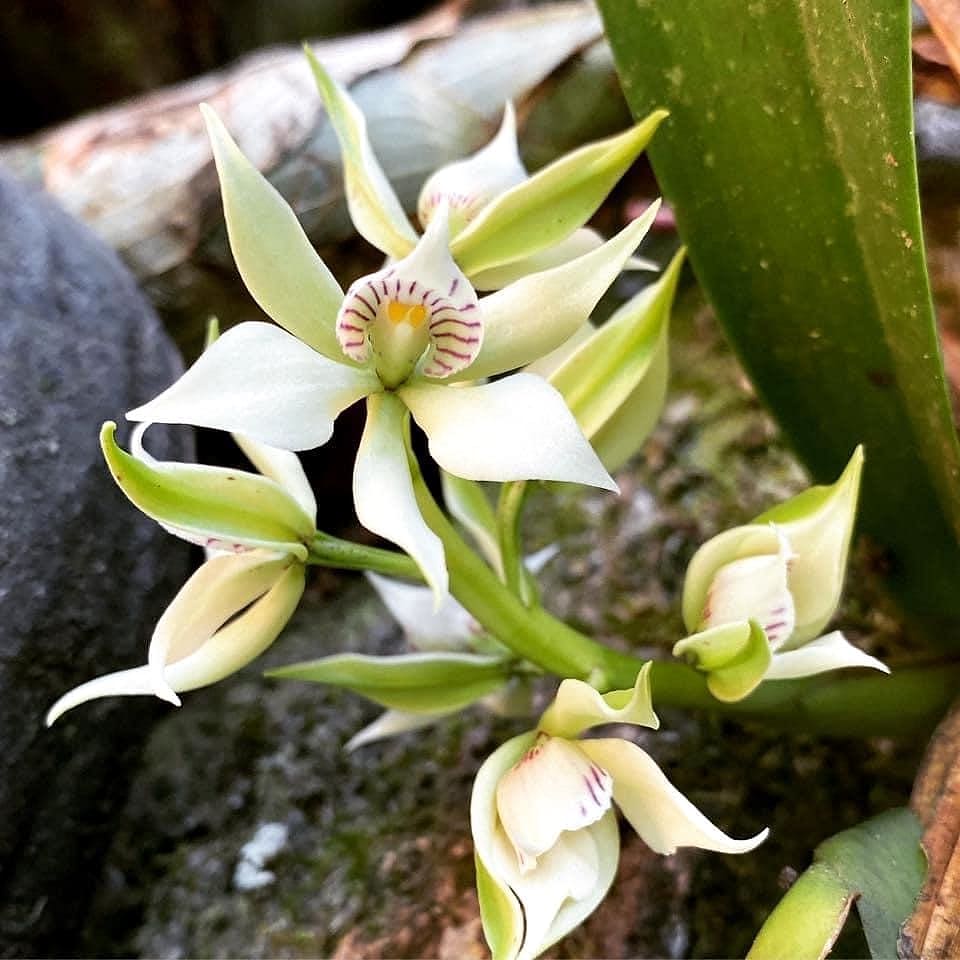
Orchids
Orquídeas
The owners keep “a beautiful collection of orchids”. Costa Rica is home to well over a thousand orchid species; its national flower, the guaria morada, is one of them.
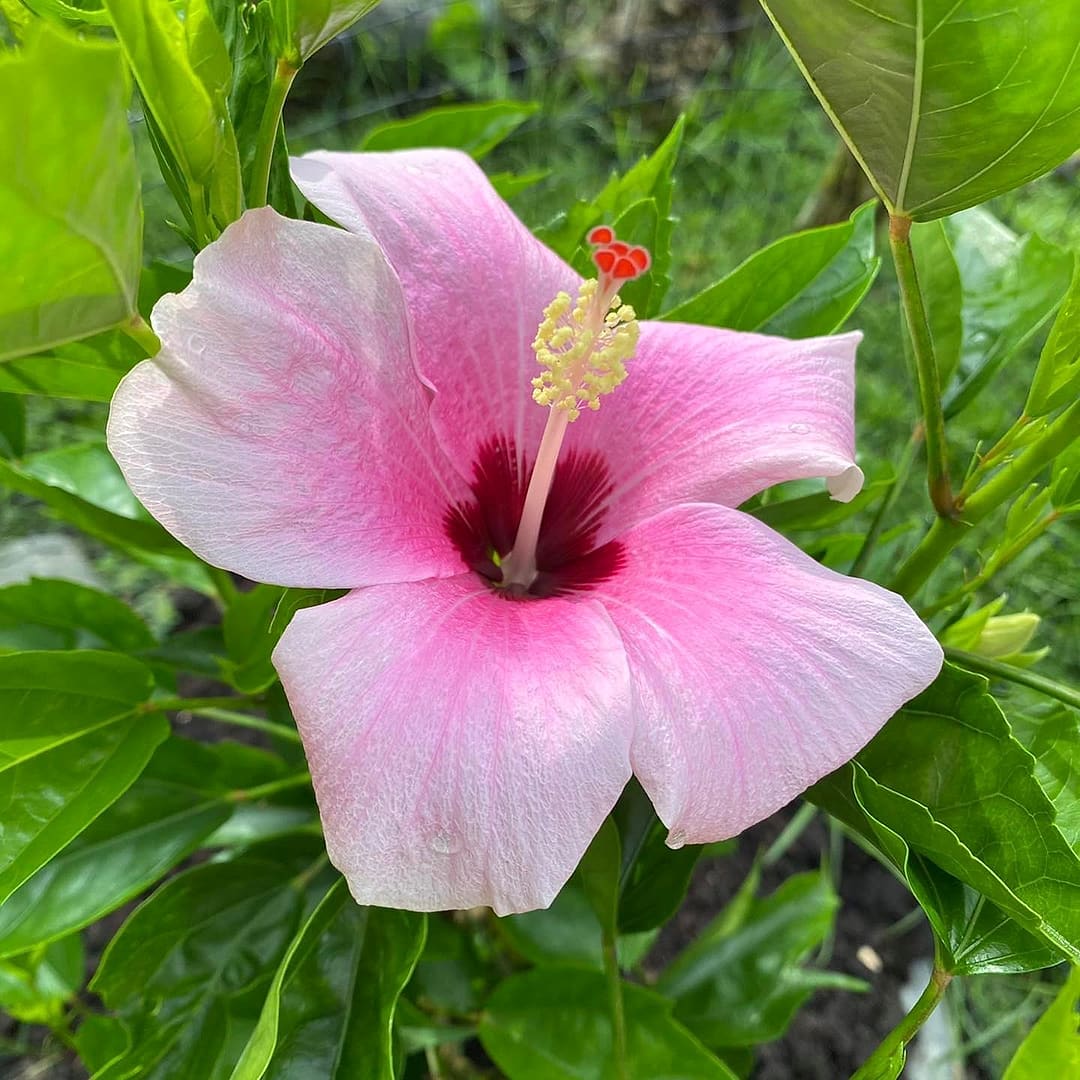
Tropical flowers
Flores tropicales
Hibiscus in pink and red, bright leaves, bromeliads — the garden’s colour is as hand-picked as the paint on the walls.
Culinary and cultural notes, not medical advice. Traditional medicinal uses are discussed in the class.
$28 per person · 2 hours · Wed & Sat 10 AM
A Caribbean homestead
Free-range chickens, guinea fowl, a shady rancho for sitting among bromeliads, and a collection of orchids and tropical flowers. For whole-house groups, the house mentions eggs from its hens.
- Vegetables, fruit trees & herbs
- Chickens & guinea fowl
- Orchids & tropical flowers